Corn replant vs. interplant: when adding seed to a thin stand still works
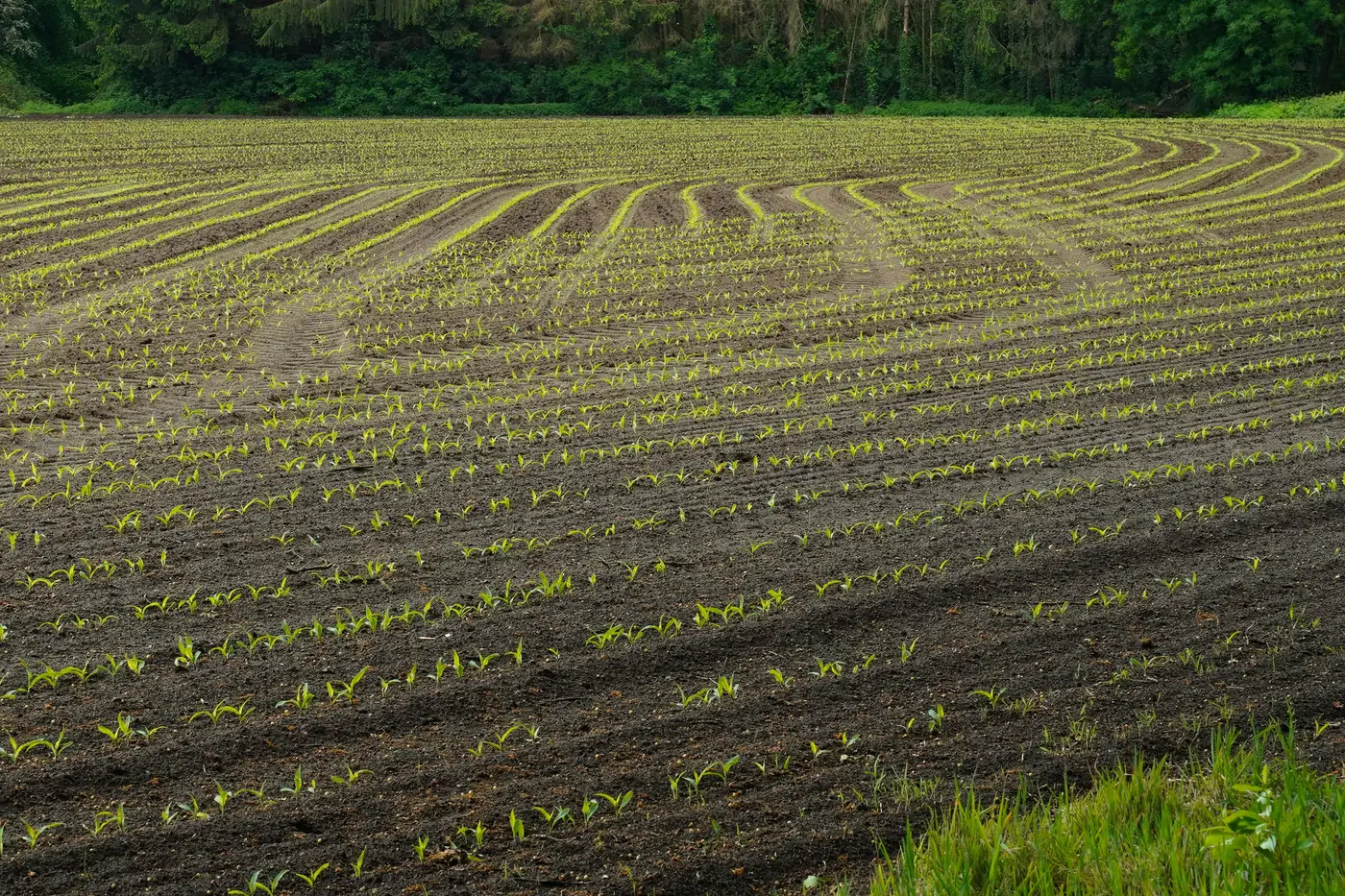
Every spring there's a field that comes up at 22,000 instead of 32,000, and someone asks whether you can just drop more seed between the rows instead of tearing the whole thing up. Sometimes you can, but the window is narrower than most people assume, and it comes down entirely to what the gap pattern actually looks like.
Interplanting corn into an existing stand isn't a new idea. Growers have been doing it since before precision planters existed. But it only pencils out under a specific set of conditions, and guessing wrong costs more than the extra seed.
What makes interplanting a real option
Interplanting works when the original stand is uniform but thin, meaning the plants that did come up are spread evenly across the field rather than clustered. If your count is 20,000 per acre and those plants are roughly every other spot in the row, adding seed between them can fill the gaps without creating a two-population mess. The original plants and the new ones will be close enough in growth stage that they compete for light and nutrients on similar terms through most of the season.
The crop stage matters as much as the count. Interplanting at VE to V2, before the original stand has gotten much of a jump, keeps the maturity gap small enough that both populations can still produce usable ears. Wait past V4 or V5 and the original plants have already claimed the canopy space. The new seedlings end up shaded, stretched, and mostly worthless by August. At that point you're not interplanting, you're just burning seed money on plants that won't make grain.
Soil moisture and herbicide history also decide this. If you've already applied a residual that targets broadleaf or grass weeds at a rate timed for the first planting, a second flush of seed can run into chemical injury the first stand never saw. And if the ground that caused the gaps in the first place (crusting, saturated low spots, a planter skip) hasn't changed, there's no reason to expect the new seed to come up any better than the old.
When replant beats interplant every time
Patchy gaps tell a different story than uniform thin stands. If the stand failure is concentrated in strips, low corners, or a planter row that never engaged, that's not a case for interplanting. That's a replant call, and usually a partial one limited to the affected acres rather than the whole field. Mixing a second planting date into existing healthy stand in those spots just adds a competing population with no upside.
Timing relative to canopy closure is the other hard line. Once the existing stand is far enough along that it's shading the row middles, any seed you drop is competing against plants with a two-to-three-leaf head start and established root systems. That's a fight the new seed loses. Past that point, the only real decision left is whether the current stand, thin as it is, is worth keeping as-is or whether a full replant of the problem area is the better economic call for the rest of the season.
This is exactly the kind of decision that depends on seeing the whole field at once rather than walking a few transects and extrapolating. A uniform-looking stand from the truck window can have a 15-acre thin patch you'd never catch on foot before the canopy closes it over. Plant Counting turns a single drone pass into a per-hectare emergence count and a gap map overlaid on the field, so you're looking at the actual pattern, uniform thin versus patchy, instead of guessing from a windshield survey.
If you're staring at a stand count that's borderline and trying to decide between interplanting, a partial replant, or leaving it alone, get a gap map in hand before you commit seed to the ground.