How many days after emergence should you fly a stand count for a replant call
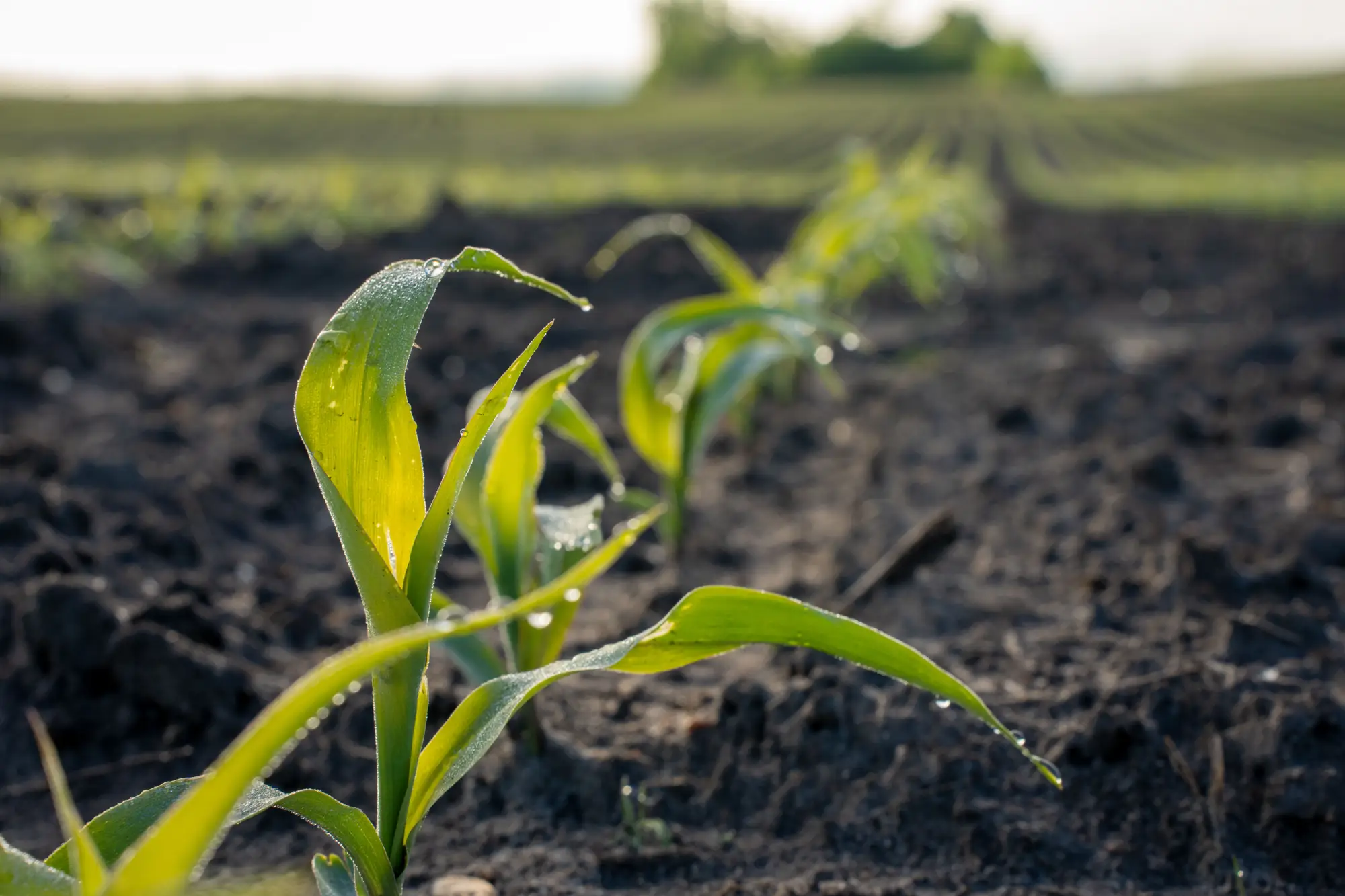
Replant decisions have a shelf life. Wait too long to count and you've either replanted a stand that would have come through fine, or watched the window close on a field that needed seed back in the ground three weeks ago. Timing the flight matters almost as much as the count itself.
The short answer
Most agronomists get a usable read somewhere between 10 and 21 days after emergence, which lines up with VE through V2 on corn and the equivalent early trifoliate stages on soybeans. Fly too early and you're counting spikes that haven't straightened up yet, plus you're still catching late emergers that will show up a few days later and make a thin spot look worse than it is. Fly too late and you've burned calendar days you needed for the replant itself, since seed, labor, and a planter window don't materialize on demand once you've made the call.
The practical target for most row-crop operations is V1 to V2. By V1 the stand has sorted itself out. The plants that are going to come up have come up, and what you're looking at is close to the final emergence pattern rather than a moving target. V2 gives you a bit more certainty on the thin spots, since a field that looked rough at V1 sometimes closes in by V2 as late emergers finally break through. But V2 also eats five to seven more days off a calendar that, in a lot of years, doesn't have them to spare.
V1 vs V2 stand count timing, and why it's a trade-off
Flying at V1 buys you decision time. Flying at V2 buys you certainty on the thin spots. Which one you need depends on how close you already are to your replant deadline.
If your agronomic cutoff for a meaningful yield response to replant is two to three weeks out, fly at V1. You want the information as early as the plants will give it to you honestly, because every day you wait to count is a day you're not using to decide, order seed, or line up the planter.
If you've got a longer runway, or the field has a history of uneven emergence from crusting or residue, V2 buys you a cleaner picture and the extra few days don't push you past your deadline. Some agronomists split the difference and fly twice, once at VE-V1 to catch the field early and flag anything obviously bad, and again at V2 to confirm before pulling the trigger on seed orders. That second flight is also the one that tells you whether a rough-looking early stand actually needed the call or just needed another week.
Soil temperature and moisture at planting shift this timeline. A cold, wet spring stretches out emergence and delays when a field hits V1, so track calendar days from actual emergence rather than from the planting date. Two fields planted the same week can be a stage apart if one caught a cold snap and the other didn't.
What the stage actually changes about the count
What you're counting shifts slightly by stage, not just how confident you are in it. At VE and early V1, gaps show up as bare ground or spiked-but-not-leafed plants, and it's easy to flag a slow emerger as a skip. By V2, the canopy hasn't closed enough to hide anything, but the plants have enough leaf area that a drone pass can pick out true gaps from thin-but-present rows more reliably than a walked transect can at a glance.
That's the real argument for flying rather than walking transects at this stage: a single pass over the field gives you an emerged-plants-per-hectare figure and a gap map while the plants are still small enough to read clearly and there's still calendar left to act on it. Plant Counting is built around exactly that window, turning one drone flight into the stand count and gap layer you need before canopy closes the door on the decision.
Send the flight or the field boundary while you've still got days left on the replant clock.