GDD to corn canopy closure: the real replant deadline
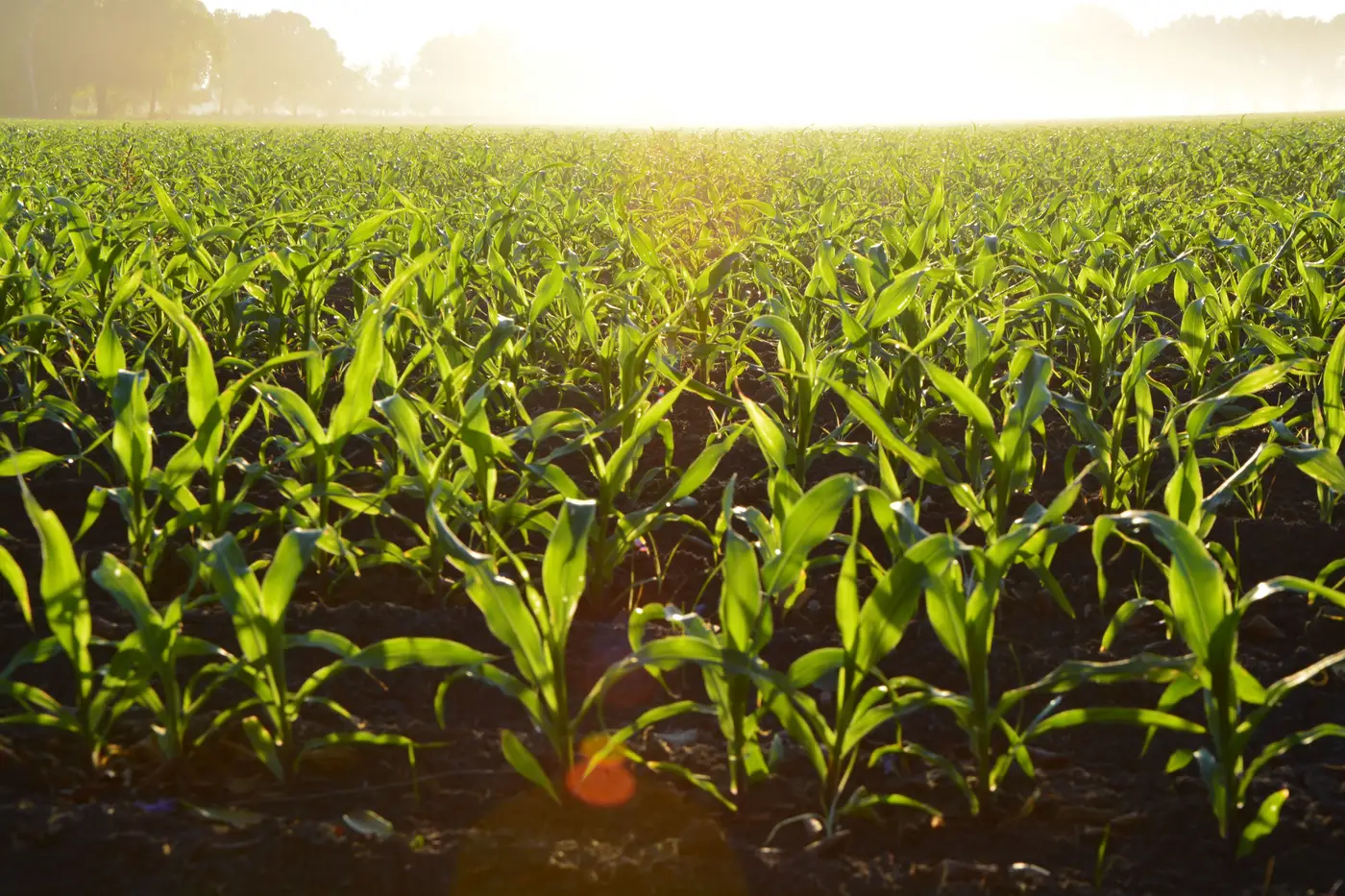
Every agronomist with a stand-count board asks some version of this question in late May: how much time is left before the rows shade in and a gap stops being visible from the cab? Growing degree days give a rough calendar, built from heat units, row spacing, population, hybrid leaf angle, and whatever the weather does between now and then.
Rough GDD targets by maturity group
As a working number, most 100-110 day corn on 30-inch rows closes canopy somewhere in the 650-800 GDD range after emergence, which usually lands between V8 and V10. Shorter-season hybrids (85-95 day) tend to run a touch faster per GDD accumulated because they're racing toward reproductive stages sooner, so they can close canopy at the lower end of that range or even a little before it. Fuller-season material planted in the same window often pushes toward the upper end, sometimes past 800 GDD, because it's carrying more leaf area potential and taking its time getting there.
These numbers are the range cited in extension bulletins and hybrid agronomy sheets, and they shift with row spacing (15-inch and twin-row canopies close noticeably earlier than 30-inch), with population (a thin stand takes longer to shade the row middles even at the same GDD total), and with a stretch of cloudy, cool weather that slows both GDD accumulation and leaf expansion at the same time.
What drives canopy closure
GDD accumulation drives leaf emergence, but canopy closure is really about leaf area index crossing the point where row middles go dark. Two fields can hit the same GDD total on the same calendar day and look completely different at V9: one with full stand and even spacing has shaded the middles, the other with a population hole or uneven emergence still has daylight hitting the ground between rows. That's the gap in the GDD math. It tells you when the average plant in a healthy, full stand should be closing canopy. It says nothing about where your actual stand has a skip, a drowned-out low spot, or a planter skip from a clogged row unit.
This is why GDD targets are useful for setting a deadline, not for finding the gaps themselves. If you know canopy closure is coming at roughly 700-750 GDD for the hybrid in the ground, that tells you how many days of daylight-to-the-soil visibility you've got left, starting from today's accumulated total. What it doesn't do is walk the field for you.
Last day to see a gap before leaves meet
In practice, the window to spot a gap from the air (or from the truck, if you're still doing it that way) closes about a week to ten days before full canopy closure, once leaf area is dense enough that adjacent rows start overlapping and a skip in one row gets masked by the plants on either side of it. Past that point, a drone pass or a windshield survey undercounts gaps that are still there, hidden under the canopy rather than gone.
That's the real deadline behind the GDD question. The calendar matters less than the point where gaps disappear from view, days before the canopy technically closes. Most fields give a week or two between a gap being clearly visible and the row middles shading over, and a lot of that window gets eaten waiting on a scouting pass, a windshield tour, or someone walking transects with a clipboard.
If you're trying to time that last look before the rows shade in, a single drone pass can give you an emerged-plants-per-hectare count and a gap map for the whole field instead of a few transect counts extrapolated across 80 acres, while there's still time to decide on a replant. Send the field boundary and your flight window, and get the count back before the GDD clock runs out.