What causes a skippy stand in no-till corn?
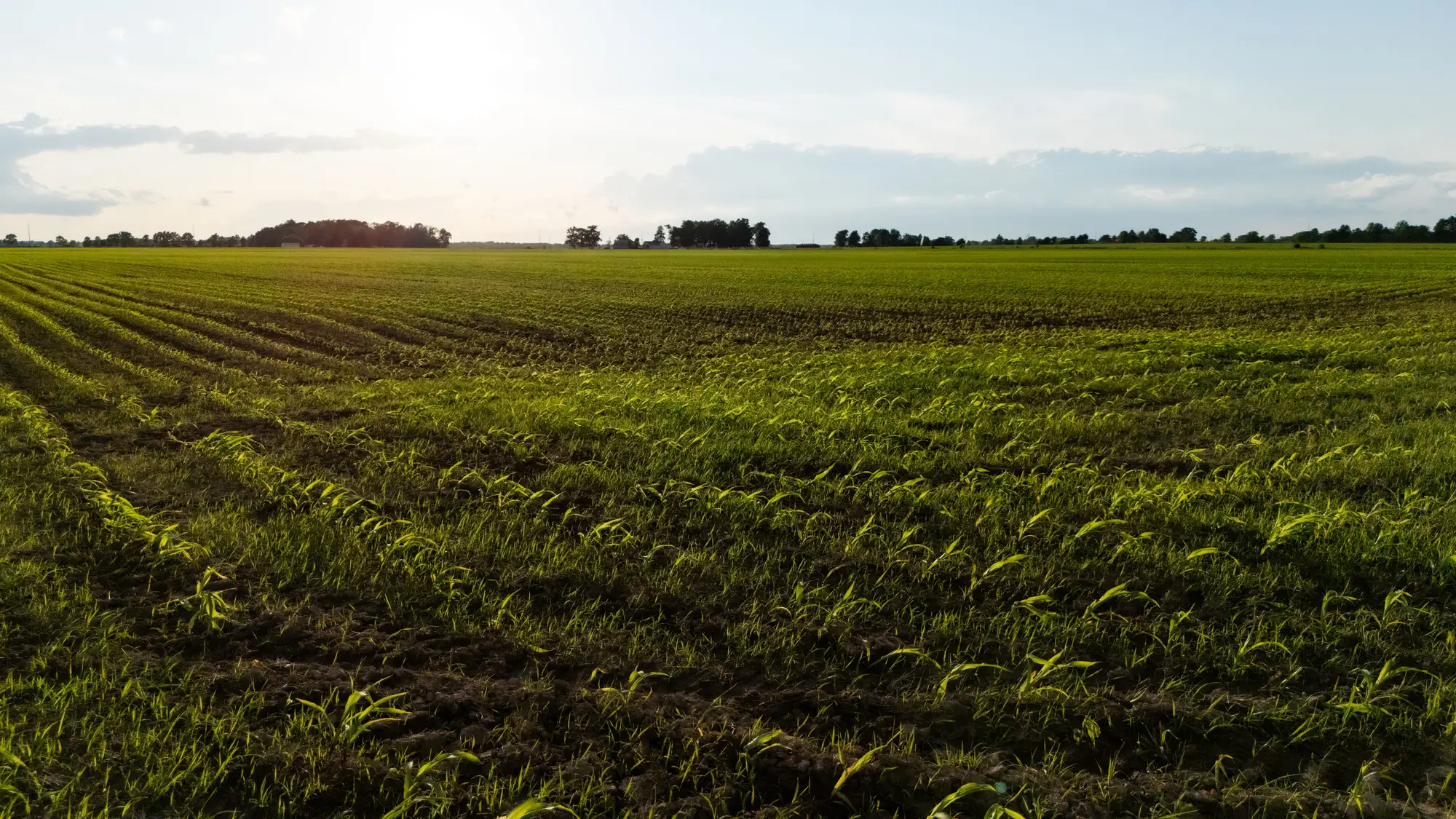
A skippy stand in no-till corn almost never has one cause. It's usually two or three things stacking on top of each other, and by the time you're walking the field at V3 trying to figure out why one strip looks thin, the clues have already started to fade. Residue decomposes, soil dries out, and the plants that did emerge are catching up just enough to make the gaps look smaller than they are.
Here's what's usually behind it.
Residue changes soil temperature and moisture as much as it blocks the row
Row cleaners set too shallow, or running in heavier corn-on-corn residue than they're dialed in for, push stalks and leaves into the seed furrow instead of clearing them off to the side. The bigger residue problem is what it does to soil temperature and moisture. A mat of residue over the row keeps soil cooler and wetter longer into spring. Seeds sitting in that cooler zone take longer to imbibe, germination drags out over days instead of hours, and you end up with plants at three different growth stages in the same twenty feet of row. That spread in emergence timing is what reads as "skippy" even when every seed eventually came up.
Seed-to-soil contact problems show up as hairpinning and sidewall smear
Hairpinned residue, a piece of stalk or leaf folded into the furrow and pinched under the seed, keeps the seed from making firm contact with moist soil on at least one side. The seed can sit there for a week doing nothing while its neighbors three inches away are already spiking. Sidewall compaction does something similar in different conditions: planting into soil that's a little too wet smears the furrow wall, and roots can't push through it cleanly even after the seed germinates. Both problems trace back to closing-wheel and downforce settings as much as to residue. A closing wheel that isn't firming the furrow consistently across the row unit, especially on a planter that hasn't been checked since last season, gives you a different seeding environment depth to depth.
Cool, wet pockets and uneven soil temperature
No-till ground warms unevenly compared to tilled ground, and residue cover isn't the same across every acre of a field. Low spots hold water and residue both, staying cooler longer. Knobs and ridges shed water and warm faster. Plant the same day across a field with that kind of variation and you're asking seed to perform in several different microclimates at once. A stand can emerge fine on average and still show real skips in the wetter draws. That pattern is a drainage and residue-distribution issue, and growers often mistake it for a planter problem.
Depth variation and planter speed
Running the planter faster than the row units can handle on uneven, trash-covered ground makes seeding depth bounce around row to row and even within a row. Shallow seed emerges fast and uneven, deep seed can struggle to push through a crusted or residue-matted surface at all. Skips that cluster at a consistent spacing, or that line up with field speed changes near turn rows, point straight at the planter.
Figuring out which one you've got
Diagnosing a skippy stand from the cab or from a few transect walks is slow. By the time you've dug enough plants to tell residue drag from sidewall smear from a cold pocket, you're closer to the replant decision deadline than you'd like. A stand count and gap pattern across the whole field makes the pattern a lot easier to read. Skips scattered randomly point one direction, skips clustered in low ground point another, and skips running in a straight line down specific rows point at the planter itself.
That's the kind of field-level emergence count and gap map before canopy closure that turns a guess about replant into a decision you can actually act on. If you're standing at the edge of a thin-looking field wondering whether it's worth the seed and the pass, that's the exact window Plant Counting is built for.