Yield-robbing gap vs. normal stand gap: where's the line?
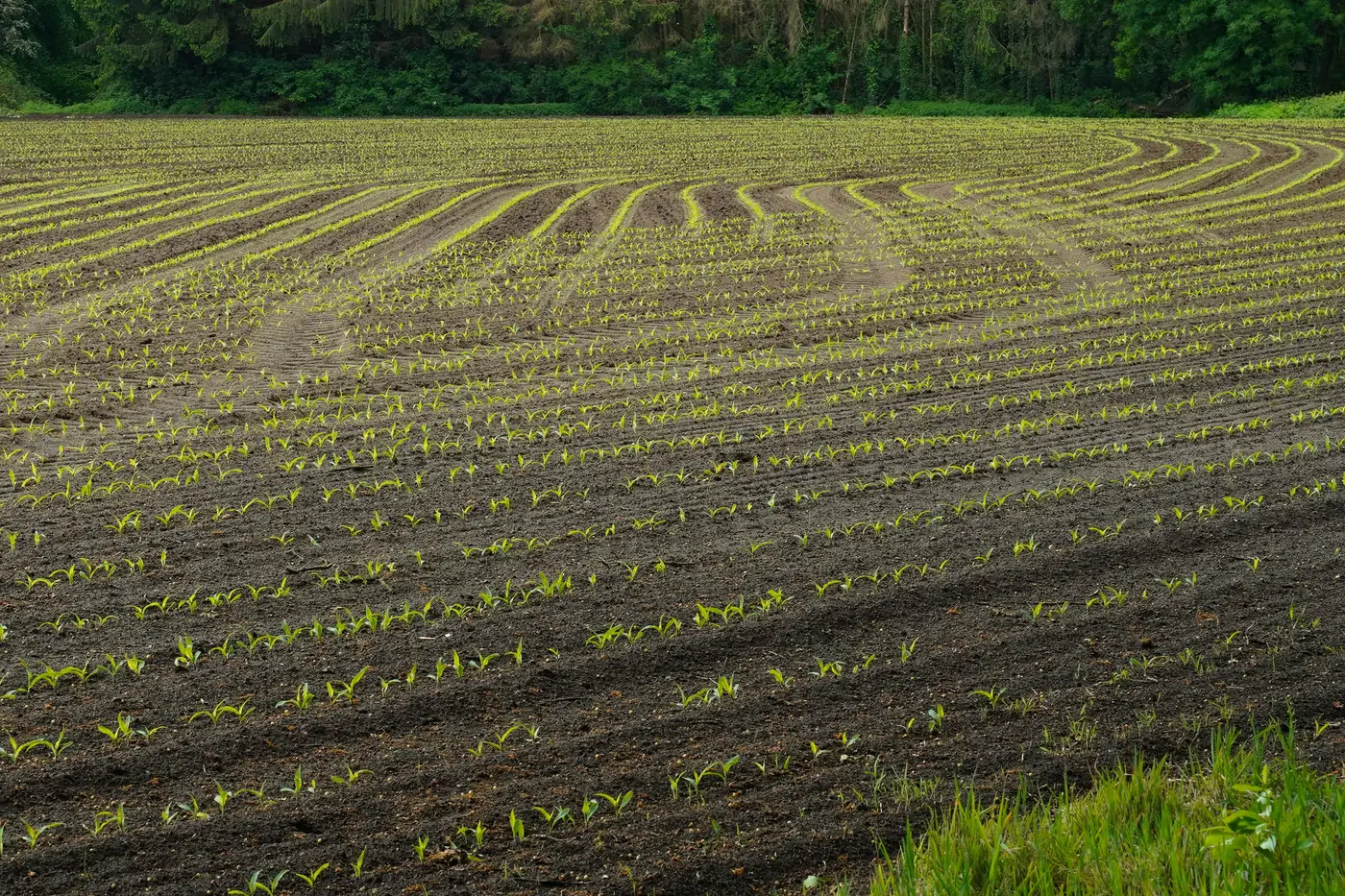
Every field has gaps. A seedling that didn't make it, a planter skip at the end of a pass, a wet spot that drowned a few feet of row. Not all of them cost you anything. The question that matters before you call a replant is which gaps the crop can grow around and which ones leave money sitting in the dirt.
Why neighboring plants can cover for a small gap
Corn and soybeans both compensate for a missing neighbor, to a point. A single skipped plant in 30-inch rows gives the plants on either side extra root room and extra light, and they'll put on a little more ear or a few more pods to partly make up the difference. That's why a stand count that's a few thousand plants per acre under your target doesn't automatically mean lost bushels. It means the field has some slack in it.
The compensation runs out once a gap gets long enough that no neighboring plant is close enough to use the open space. Past that length, you're not looking at a few plants carrying extra load. You're looking at bare row that grows nothing all season.
The row-length rule of thumb
Most agronomy guides land in the same neighborhood: a skip under about 3 feet in corn rarely shows up in yield, because the plants flanking it compensate well enough to flatten the loss. Skips between 3 and 6 feet start costing real bushels per occurrence, and once you're past 6 feet of bare row, that stretch is producing close to nothing for the season regardless of how good the rest of the stand looks. Soybeans tolerate gaps a little better than corn because beans branch and fill lateral space more aggressively, so the threshold where a skip turns costly sits further out.
What changes the math is how many of those gaps there are and how they're distributed. One 5-foot skip in an otherwise full stand is a rounding error on a 40-acre field. Fifteen of them scattered across low spots, planter-overlap rows, and compacted headlands is a different conversation, because now you're subtracting that lost row length from your effective population across the whole field, not just one patch.
Doubles and uneven spacing complicate the count
A gap isn't the only thing that eats yield. Doubles, where two plants emerge close enough together to compete for the same root zone, waste population too, just differently. A field can hit its target plants-per-acre on paper and still underperform because the population is bunched into doubles and triples instead of spread evenly. That's part of why a raw stand count alone doesn't tell the whole story. You need to see where the gaps and the clusters sit relative to each other, not just the average.
What this means for a replant call
The decision isn't "is my stand count low." It's "how much of my row length is bare past the point where neighboring plants can cover it, and is that total large enough to beat the cost and yield drag of tearing up what's already growing to replant." That math needs an actual gap layout, not a walked transect that samples a few hundred feet and extrapolates.
That's the gap a per-hectare emergence count and a gap map from a single drone pass is built to close, flagging which stretches of row cross that yield-robbing length before the canopy closes over them and the window to replant shuts for the season. If you've got a field where the stand count looks borderline and you need to see the actual gap lengths before the canopy closes, that's worth a look while the window's still open.