Stand uniformity vs. plant population: why evenness wins the replant call
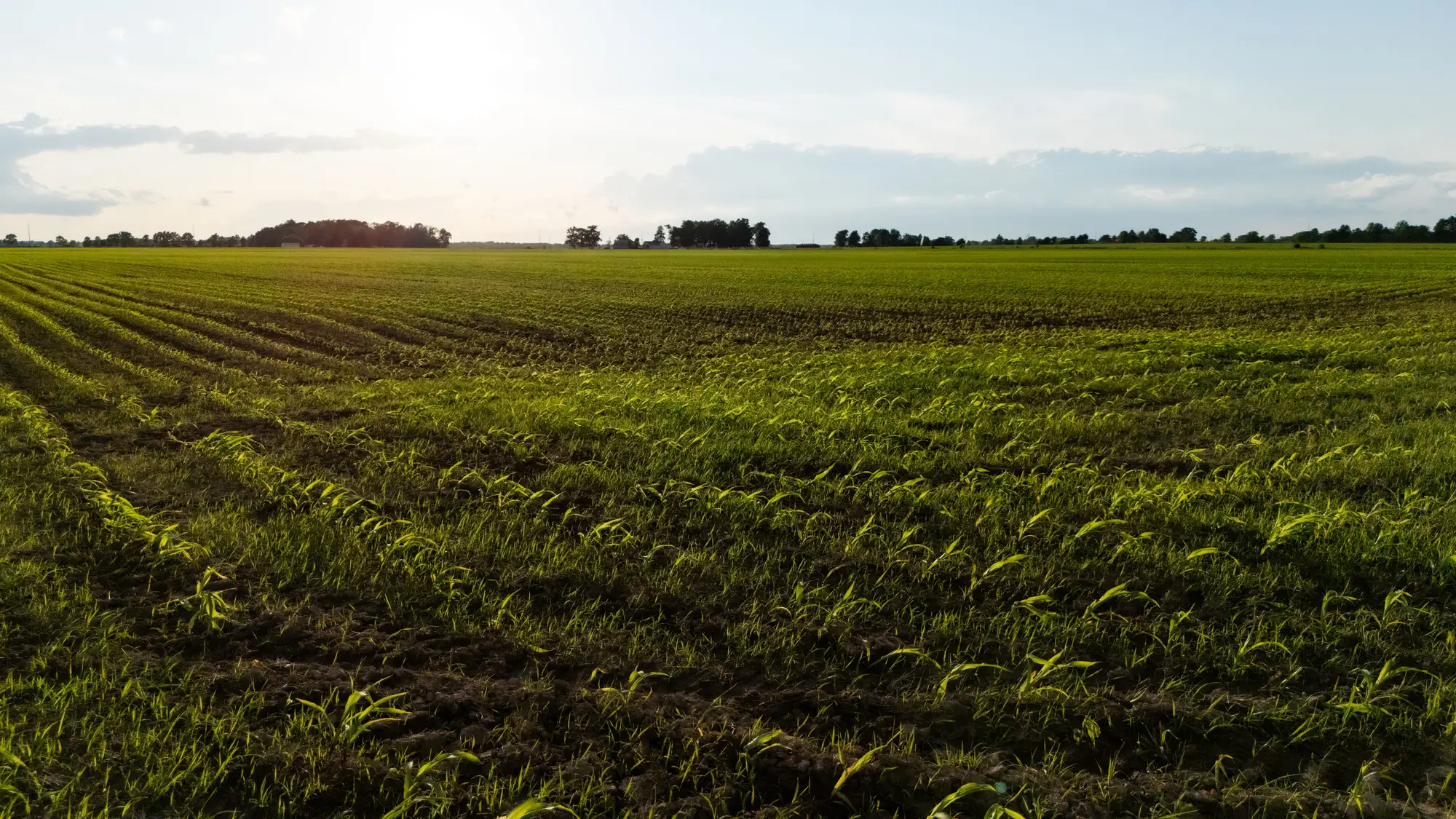
A field agronomist walks into the office with a stand count of 31,000 plants per hectare on a corn field. By the book, that's a keeper. No replant conversation needed. Then somebody drives the field three days later and finds a 40-meter stretch along the waterway where almost nothing came up, offset by a strip near the road that's thick enough to look doubled. The average was fine. The field wasn't.
That's the gap between plant population and stand uniformity, and it's the thing that gets missed when a replant decision leans on one number instead of the pattern behind it.
Population is an average. Uniformity is where the plants actually are.
Plant population per hectare is just a count divided by an area: total plants over total hectares. It counts emerged plants without recording their spacing or where in the field they came up. Two fields can post the identical population number and have completely different yield outcomes, because one has consistent plant-to-plant spacing and the other has long skips next to crowded doubles.
Skips matter more than the stand count suggests. A gap of four plants in a row doesn't just remove four plants' worth of yield. The plants on either side of that gap branch out, compensate some, and still come up short of what a fully populated row produces. Row-level research on corn has shown for years that a stand with scattered four-plus-plant gaps yields worse than a uniform stand at a meaningfully lower population. The evenness of the stand does as much work as its size in setting what that field yields.
What even emergence actually looks like in the field
Even emergence corn means plants coming up within a tight window of each other, usually two to three days in a well-managed field. When emergence drags out over a week or more, you get a mix of plant sizes competing for the same light and nutrients at the same growth stage. The late emergers rarely catch up. They turn into barren stalks or runts that drag the yield curve down even though they're technically "plants" in your stand count.
This is where raw population numbers get misleading in a replant decision. A field with staggered emergence can hit an acceptable population on paper while carrying a meaningful percentage of plants that will contribute little to final yield. The stand count says keep it. The uniformity pattern says something different.
Why the replant threshold tables assume uniformity
Most of the replant decision charts seed companies and extension agronomists publish, the ones that tell you expected yield at a given population, assume a reasonably uniform stand. That assumption is baked into the table, not stated on it. Run the same population through a patchy, gap-heavy stand and the real yield outcome sits below what the chart predicts. If you're pricing a replant decision off the chart number alone without checking the distribution, you're pricing it off an assumption that may not hold for that particular field.
This is also why two agronomists can walk the same field with a stand-count board and land on different calls. One hits a representative 1/1000th-acre section and gets a decent count. The other happens to step into the thin strip by the end rows and panics. Neither one has seen the whole field's pattern, because a handful of transects can't show it.
Seeing the pattern, not just the number
Seeing where the gaps sit relative to the whole field, before you commit to a replant call or decide to leave it alone, matters more than running the number through a better formula. A full-field gap map, built from a single drone pass over the field rather than a handful of walked transects, shows whether a borderline population is spread evenly or concentrated in one low spot you can patch instead of replanting the whole 60 hectares. Plant Counting turns a single flight into that per-hectare count and gap layer while there's still time to act on it.
If the next stand count you're staring at feels like it's hiding more than it's telling you, that gap map is worth a look before the canopy closes the window on you.